Confidently make important decisions with the help of AI.
We build data and AI systems to optimise your business workflows. When we connect AI across all your systems, your teams can confidently make good decisions by clearly seeing what is happening alongside what the AI predicts and recommends.





Most AI deployments fail due to a lack of expertise, solving the wrong problem, or ignoring the existing experience within your business teams. Our engineers with extensive experience sit alongside your best people and collaboratively solve the top priorities of your leaders.
Capabilities
The methods we use.
What is likely to happen?
What is likely to happen? Forecast ranges make uncertainty part of the plan.
Explore forecasting →What changed for our customers.

“The prediction engine has fundamentally changed how we operate our business.”
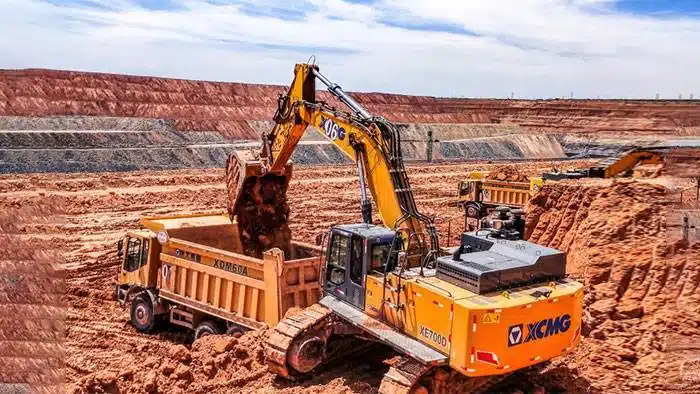
Their team used to work out which sales targets to chase from spreadsheets. We built a prediction engine that picks out the leads most likely to convert. Now the team puts its effort into those leads, and managers have time back to train their people.
Reported outcomes
- Human effort re-allocated to leads most likely to convert — 40% YoY revenue increase
- Staff morale boost from a more effective, less grinding sales process
- 95% reduction in time spent on spreadsheet analytics to prioritise targets
- Managers freed up to train their teams more deeply


01 / 04
Challenges we've worked on.
Assets & Maintenance
Repair, replace or defer? Compare downtime, maintenance cost and asset life.
See what we build →Demand & Inventory
How much should we hold? Weigh service levels, stockout risk and working capital.
See what we build →Production & Capacity
Where should capacity go? Compare demand scenarios, bottlenecks and resource constraints.
See what we build →Supply Chain & Procurement
Which exception needs intervention? Assess lead times, alternatives and downstream effects.
See what we build →Pricing & Margin
Which price protects margin? Compare volume, cost and customer response.
See what we build →Capital & Investment
Where should the next dollar go? Compare options, cashflow and downside scenarios.
See what we build →Customers & Commercial
Where should people focus? Prioritise opportunities using evidence and commercial judgement.
See what we build →
















Common questions
Will AI actually help a business like mine?
Probably, if you have a costly problem that repeats and records of it in your systems. In manufacturing, logistics, mining and retail, the useful work is rarely a chatbot. It is ranking which sales leads to chase, predicting which parts a machine will need, finding wasted ad spend, or letting managers ask questions across finance, sales and operations data. If none of your problems look like that, off-the-shelf tools may be all you need.
What can AI do with the data we already have?
Most mid-sized businesses already hold years of sales, stock, maintenance and finance records across several systems. When those records are connected, AI can find patterns a person would miss in a spreadsheet: which customers are likely to buy, which assets are likely to fail, and where money is leaking. It can also answer plain-English questions across all of that data, so managers do not wait on an analyst.
Where should a business start with AI?
Start with one problem that costs you money every week, not with a technology or an AI strategy. Bring in the person who deals with that problem every day, take a sample of the real data behind it, and test whether AI can solve it before you commit a budget. A small working result tells you more than a plan does.
Do I need clean data before using AI?
No. Almost no business has clean data, and a company-wide clean-up before you start is rarely worth it. The data only needs to be good enough for the one problem you pick. A short test on a sample shows quickly whether the data exists, whether it can be extracted, and which system holds the true figures.
Why do most AI projects fail?
By some estimates, more than 80% of AI projects fail (RAND, 2024). RAND found the most common cause is that the project aims at the wrong problem, or the problem is not clearly explained to the people building it. The next causes are poor data, a focus on the technology instead of the problem, and too little investment in the systems around it. You avoid most of these when you start from a specific business problem and prove the result on real data early.
Is ChatGPT or Copilot enough, or do we need custom AI?
For general work such as drafting, summarising and searching documents, off-the-shelf tools are usually enough, and they cost less. Custom AI is worth it when the value depends on your own data in your own systems, such as your ERP, CRM or maintenance records, or on a process that no product covers. General tools help individuals, but they rarely fit how a whole team works.
How much does custom AI software cost in Australia?
The cost depends mostly on how many systems must be connected, the state of the data, how many people will use it, and what it costs to run and support after it is built. The safest way to buy it is in stages with a fixed price for each, so you pay for the next stage only after the last one has shown a result.
How long does it take to see a return from AI?
In a 2025 Deloitte survey of large European and Middle Eastern companies, most took two to four years to see a satisfactory return on a typical AI project. A narrow project with one agreed number, such as hours saved, stock reduced or spend recovered, can show whether it works within weeks. Agree that number before you start, so you know when you have the return. With a small scope, an experienced team and a clear value proposition, payback in 6 to 12 months is realistic.
Start with the problem that costs you most.
Cookie preferences
We use essential cookies to run the site. With your permission, we also use analytics cookies to understand what content helps visitors make better data and AI decisions. Read our privacy policy.