Embedded Build Team
A senior AI engineer inside your business in weeks, shipping production-grade from day one.
Week by week
What the engineer actually does, week by week
| Phase | Weeks | What the engineer is doing | What you see |
|---|---|---|---|
| Embed | 1 to 2 | Scoping interviews with the sponsor and end users. Architecture design. CI/CD pipeline, test harness, and observability scaffolding stood up on day one. | A written scope doc, an architecture diagram, and a running pipeline with a hello-world deploy. |
| Build | 3 to 6 | First functional slice of the system. Weekly demos to real users. Tests written alongside the code, not after. | A working system used by real people by week 4. Weekly demo recordings. |
| Harden | 7 to 12 | Iteration on user feedback. Integration with systems of record. Load testing, error handling, cost controls, and security review. | A production-ready system passing your change advisory board and security sign-off. |
| Handover | Final 2 | Runbook writing. Documentation. Shadowing your ops or internal engineers. Locking in the optional support path. | Runbooks your on-call person can follow, documentation your next engineer can read, and a clear support arrangement. |
Engineering discipline is concrete from the first commit: version-controlled infrastructure, automated tests running on every push, structured logs, metrics, alerting, and deployment pipelines that roll back on failure. You get the standard of a senior in-house team, without building one.
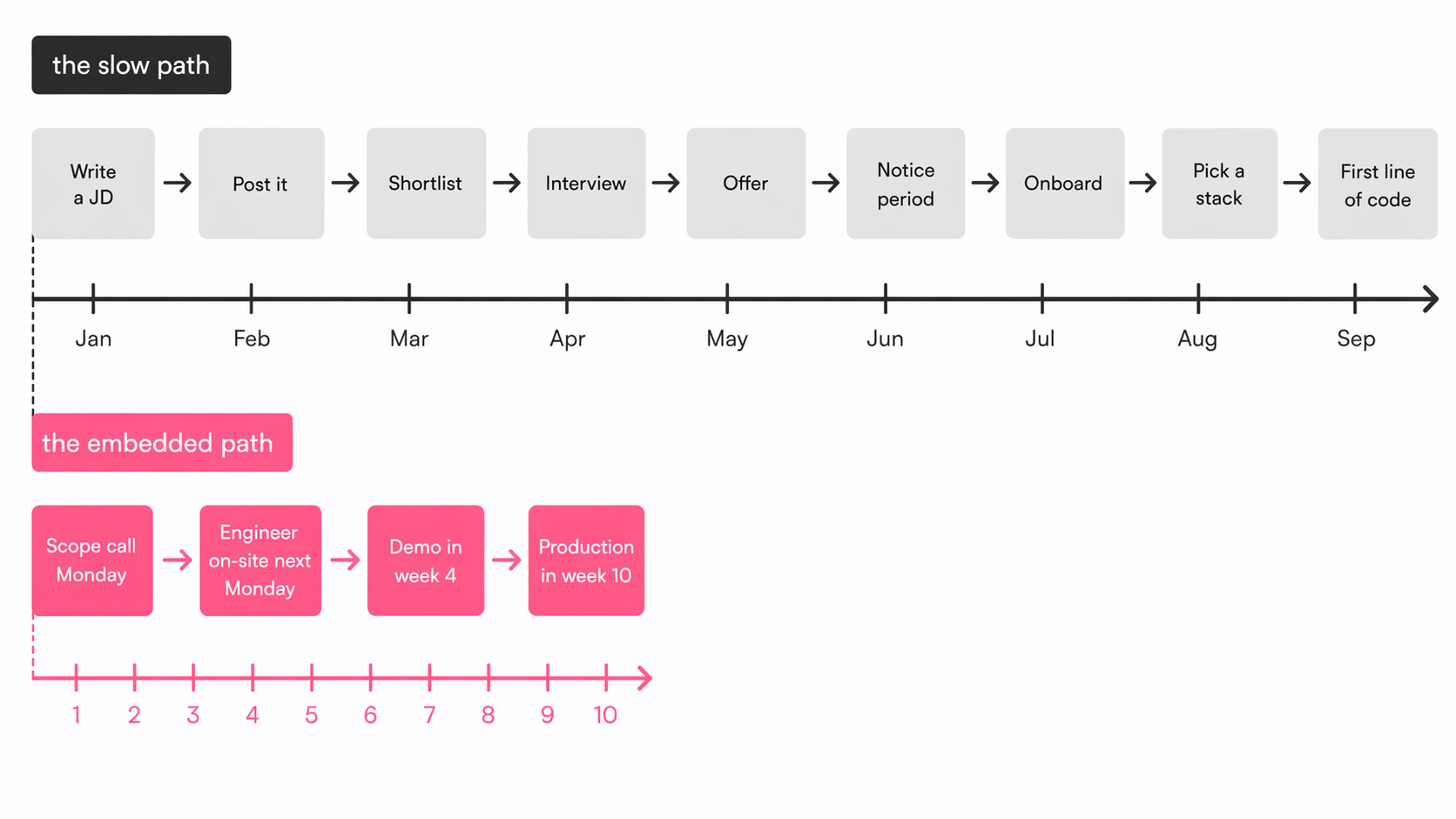
Slow vs embedded
Slow path vs embedded path
Cookie preferences
We use essential cookies to run the site. With your permission, we also use analytics cookies to understand what content helps visitors make better data and AI decisions. Read our privacy policy.